Home
Home Needle Roller Bearing vs. Cylindrical Roller Bearing: What's the Difference for Your Project?
 2026-03-05
 0
0
Every machine, from a small electric drill to a massive industrial gearbox, relies on tiny components to manage motion and reduce friction. Bearings are critical components inside these machines, with two of the most commonly compared types being needle roller bearings and cylindrical roller bearings. While they may look similar at first glance, these two bearing types have distinct designs and strengths. Choosing the right one is critical—the wrong choice can lead to premature wear, equipment failure, and costly downtime. So, what exactly sets them apart, and how do you know which one your application requires?
The Core Difference: Roller Geometry
The fundamental distinction between these two bearings lies in the shape and proportions of their rolling elements.
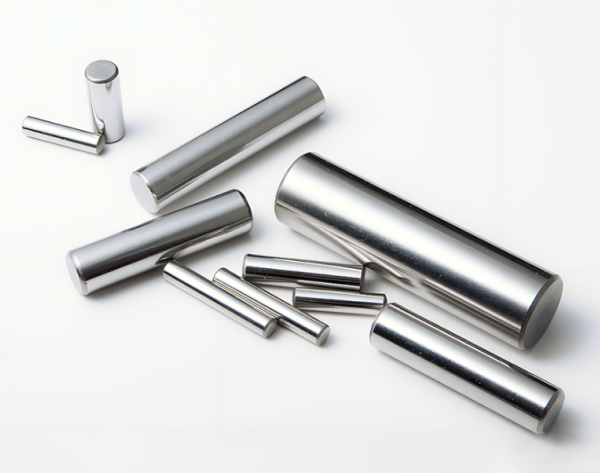
l Cylindrical Roller Bearings: These bearings use rollers that are cylindrical in shape, similar to short, uniform logs. The length of each roller is only slightly greater than its diameter. This creates a large contact area between the rollers and the raceways, allowing the bearing to handle very heavy radial loads (loads perpendicular to the shaft).
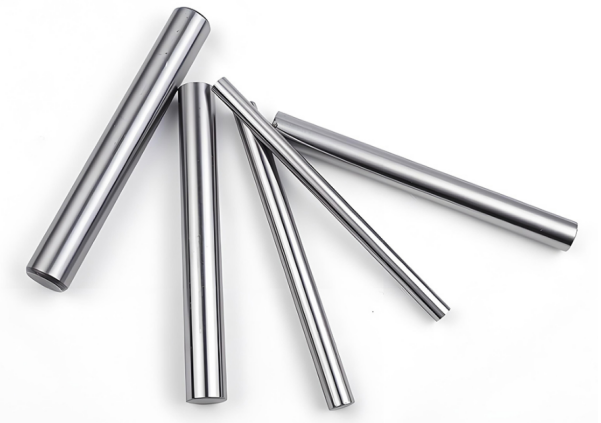
l Needle Roller Bearings: As the name implies, these bearings use long, thin rollers that resemble sewing needles. A needle roller bearing is defined by rollers with a length that is many times their diameter. This slender profile is the key to their unique advantages.
Advantage 1: Saving Space and Reducing Weight
Modern machinery often demands compact, lightweight designs. Think about the transmission in a vehicle or the motor inside a power tool—every millimeter of space is carefully engineered.
This is where the needle roller bearing offers a clear advantage. Because its rollers are so thin, the overall bearing wall can be significantly thinner than a cylindrical roller bearing designed for the same shaft diameter. This allows engineers to build smaller, lighter, and more efficient machines without sacrificing performance.
For example, a drawn cup needle roller bearing (such as the HK or BK Series) consists of a thin, precise steel shell packed with needle rollers. It fits into tight radial spaces where a bulkier cylindrical bearing simply cannot be installed. Cylindrical roller bearings, with their larger rollers, require more radial space. They are the preferred choice when space is less constrained and maximum load capacity from a bearing of a given size is the priority.
Advantage 2: Load Capacity in Different Contexts
Matching the bearing to the load requirements of your application is essential.
l For maximum absolute strength, a cylindrical roller bearing is typically the winner. Its larger, stockier rollers provide a greater contact area, enabling it to handle extremely high radial loads. This makes it ideal for heavy industrial equipment, large electric motors, and gearboxes where space is not the limiting factor.
l For high load capacity in a compact space, the needle roller bearing is the superior choice. By packing a high number of long, thin rollers into a small cross-section, it achieves an impressive load rating relative to its size. Full complement drawn cup needle roller bearings (like the FY/MFY Series) take this even further by removing the retaining cage to fit even more rollers, maximizing load capacity in the tightest spots. This makes them perfect for demanding applications like automotive transmissions, compressors, and construction machinery.
Advantage 3: Speed and Friction Characteristics
Both bearing types can operate at high speeds, but their designs influence performance.
Cylindrical roller bearings generally have an advantage in very high-speed applications. Their design promotes efficient lubrication flow and generates less heat at extreme RPMs.
Needle roller bearings are also capable of high speeds, but their design can create more friction. To address this, manufacturers offer designs with precision cages. A needle roller and cage assembly (like the K Series for radial loads or the AXK Series for thrust loads) separates each needle roller, preventing metal-to-metal contact between them. This reduces friction, allows for higher operating speeds, and improves lubrication compared to a full complement (cageless) design.
Choosing the Right Bearing for Your Needs
To simplify your selection process, consider these practical questions:
1. What are your space limitations? If radial space is extremely tight, a needle roller bearing is likely the most practical solution.
2. What is the nature of the load? For extremely heavy radial loads where space allows, a cylindrical roller bearing is a reliable, durable workhorse. For high loads within a compact envelope, a needle roller bearing is the better fit.
3. What types of loads are present? Remember that both bearing types come in radial and thrust configurations. For axial loads (loads parallel to the shaft), you might consider a thrust needle roller and cage assembly or a cylindrical thrust roller bearing, depending on your space and load requirements.
Summary
Both bearing types are fundamental to modern machinery, each serving a distinct purpose. A cylindrical roller bearing is like a powerful, straightforward tool—ideal for handling heavy loads when you have the space to accommodate it. A needle roller bearing is a precision instrument designed to deliver strength and performance in tight, demanding environments where every millimeter counts.
At Suzhou Dongwu Needle Bearing Co., Ltd. , we specialize in manufacturing both types, offering extensive product lines backed by strong R&D capabilities. From basic HK Series drawn cup bearings for automotive accessories to machined needle roller bearings (like the NA/NAV Series) for heavy industrial applications, our portfolio covers over 700 varieties to meet diverse engineering needs.
By understanding the fundamental differences in roller geometry, space requirements, and load capacities, you can make an informed decision that ensures your equipment runs smoothly, efficiently, and reliably. When in doubt, consulting with the experienced team at Suzhou Dongwu Needle Bearing Co., Ltd. can help you select the exact component your project demands.