Home
HomeThe Secret to Smoother Machines: Understanding the Flexible Rubber Needle Roller Bearing
 2026-02-28
 0
0
Have you ever wondered what makes your car feel smooth on a bumpy road, or how a large farming machine can run for hours without shaking itself apart? The answer often lies in small, cleverly designed components that work hard behind the scenes. One of these unsung heroes is the flexible rubber needle roller bearing.
At its heart, this is a special type of bearing designed to handle heavy radial loads (forces pushing down from the side) while also solving some of the biggest problems in machinery: noise, vibration, and misalignment. Let's break down how its smart design works and why it's so important for modern equipment.
The Genius of the Design: Rubber Meets Rollers
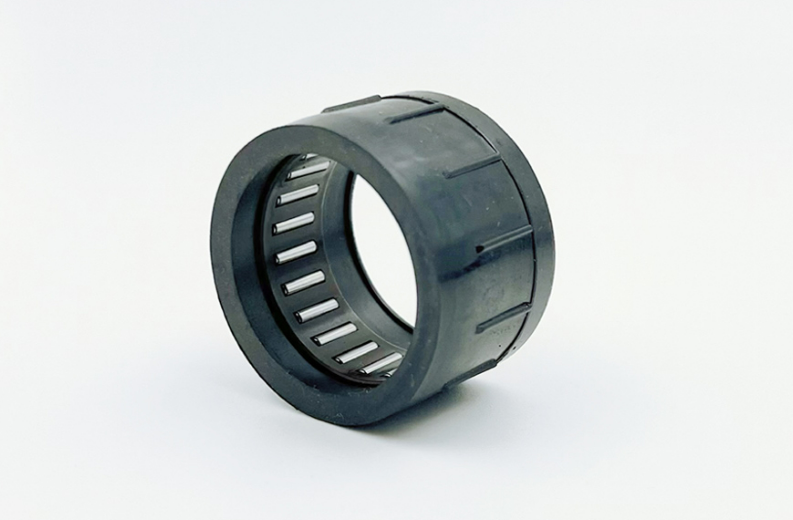
Imagine a standard bearing, which is typically made of hard steel. Now, imagine wrapping the outer part of that bearing in a precise layer of high-tech rubber or bonding it inside a rubber housing. That's the basic idea behind the flexible rubber needle roller bearing.
This isn't just rubber-glued on as an afterthought. The rubber layer is an integral part of the bearing's structure. It acts as a flexible "cushion" between the hard steel rollers inside and the housing (the part of the machine that holds the bearing). This simple but powerful combination creates four major advantages:
Vibration Damping (The Shock Absorber): Hard steel transfers vibration directly. When a machine part spins or moves, tiny imperfections can cause it to shake. The rubber layer in this bearing acts like a shock absorber. It soaks up these vibrations, preventing them from traveling through the rest of the machine. This protects sensitive components and makes the whole system run more smoothly.
Noise Reduction (The Silencer): Because the rubber absorbs vibrations, it also dramatically cuts down on noise. Without vibration, you get less of the humming, rattling, and droning sounds that machines often make. For operators who spend long hours around equipment, this can make a huge difference in comfort and safety.
Compensation for Misalignment (The Problem Solver): In the real world, shafts and housings don't always line up perfectly. They can be slightly bent during installation, or they might shift slightly under heavy load. A standard rigid bearing would struggle with this, creating "binding" points that lead to wear and failure. The flexible outer ring of this bearing allows it to tilt and adjust slightly. It compensates for these minor misalignments, keeping everything rolling smoothly and preventing damage.
Shock Load Absorption (The Bodyguard): Machines often experience sudden, sharp impacts—think of a car hitting a pothole or a piece of farm equipment striking a rock. These "shock loads" can send a damaging spike of force through steel bearings. The rubber layer in a flexible bearing compresses to absorb the initial impact, acting as a bodyguard for the more delicate rollers and the machine components. This protects the bearing and extends its life.
Where Does This Bearing Shine? Key Applications
Because of these unique properties, the flexible rubber needle roller bearing is a perfect fit for machines where vibration is the enemy. You'll often find it in:
Automotive Systems: This is a classic application. These bearings are commonly used in steering columns, as mentioned on the product page. They help isolate the driver from road vibrations, making for a more comfortable and controlled drive. They're also great for suspension systems, pumps, and air conditioning compressors, where quiet and smooth operation is a must.
Pumps and Compressors: Any pump or compressor uses a motor to create movement, which naturally creates vibration. Using a flexible bearing helps isolate these vibrations, preventing them from being transmitted through pipes or mounting brackets. This protects the pump's seals and internal parts, reducing leaks and extending its service life.
Agricultural Machinery: Farming equipment like tractors, harvesters, and balers operate in some of the toughest conditions. They endure constant vibration, heavy shock loads from uneven terrain, and exposure to dirt and debris. The flexible rubber bearing's ability to absorb shocks and its good sealing properties (keeping contaminants out) make it incredibly durable and reliable in this demanding environment.
The Power of Customization: Not a One-Size-Fits-All Solution
One of the best things about the flexible rubber needle roller bearing is that it's highly adaptable. As our product page shows, "There are many structures of flexible rubber needle roller bearings, our company can design and manufacture according to the different requirements of users and meet their needs."
This means that instead of just buying a standard part, engineers can work with manufacturers to get a bearing tailored to their exact machine. They can specify:
The hardness of the rubber: A softer rubber for maximum vibration damping, or a firmer compound for more precise movement.
The dimensions: The inner diameter, outer diameter, and width can be made to fit a unique space.
The shape of the rubber housing: It can be designed with special grooves or flanges to fit perfectly into its mounting spot.
This flexibility in design ensures that the bearing isn't just a component, but an integrated solution that makes the entire machine better.
Conclusion
The flexible rubber needle roller bearing is a brilliant example of how combining simple materials—precision steel rollers and a high-tech rubber layer—can solve complex engineering challenges. By reducing noise, damping vibration, compensating for misalignment, and absorbing shocks, it plays a vital role in making our vehicles, pumps, and farm equipment quieter, smoother, and more reliable. Its customizable nature means that no matter how unique the application, there's likely a flexible bearing solution ready to make it run better.