Home
HomeThe Meaning of Precision in High Performance Clutch Bearings
 2026-02-19
 0
0
If you've ever wondered how automated machines operate so smoothly and quietly, the answer often lies in small components with incredibly tight tolerances. In the world of precision engineering, high precision drawn cup clutch bearings represent a critical technological advancement that directly impacts equipment performance. These specialized components are engineered to exacting standards, making them essential for modern automation systems.
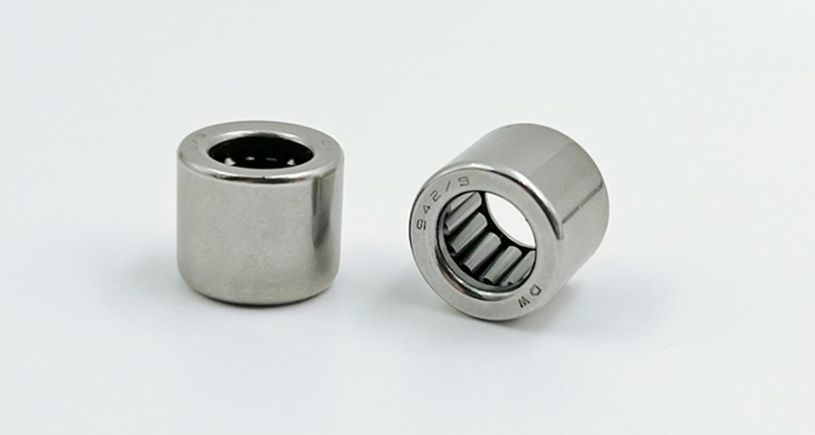
Defining High Precision in Bearings
When engineers talk about "high precision" in bearings, they're referring to four key measurable characteristics that determine performance:
Dimensional Tolerances refer to how closely a bearing's actual measurements match its designed specifications. Even tiny variations can cause significant problems in assembled equipment. For example, a drawn cup clutch bearing designed for a 10mm shaft must fit perfectly to avoid operational issues.
Concentricity measures how perfectly circular a bearing is. If a bearing isn't concentric, it won't rotate evenly, causing vibration and premature wear.
Runout Control refers to how much a bearing wobbles or deviates from perfect rotation. Low runout means smoother operation.
Surface Finish describes how smooth the bearing's contact surfaces are. Smoother surfaces reduce friction, heat generation, and wear.
These precision factors work together to determine a bearing's performance in demanding applications.
How Precision Translates to Performance
In high-speed and high-frequency automated equipment, the connection between precision engineering and operational performance is direct and measurable. When bearings operate at speeds reaching 10,300 revolutions per minute or higher, every micron of precision matters.
1. Stability Advantages
Precision bearings maintain consistent performance under varying loads and speeds. The full complement needle roller design maximizes load distribution across more contact points, enhancing stability. This design allows bearings to handle both dynamic loads (during motion) and static loads (when stationary) effectively, with some models rated for over 55,000 Newtons of static load capacity.
2. Noise Reduction
Vibration causes noise in mechanical systems. High precision bearings with excellent concentricity and surface finish minimize vibration at its source. In automated environments where multiple machines operate simultaneously, this noise reduction contributes to better working conditions and equipment monitoring.
3. Extended Service Life
Precision manufacturing directly correlates with longevity. When bearings have proper dimensional tolerances and smooth surfaces, they experience less internal friction and wear. Some precision bearings in automated systems operate continuously for years without replacement, significantly reducing maintenance costs and downtime.
Applications in Modern Automation
High precision drawn cup clutch bearings are particularly valuable in several automated applications:
l Automotive & E-Mobility: EPS motor decoupling, transmission oil pump drives, hybrid disconnect mechanisms, and e-bike/motorcycle starter one-way clutches.
l Packaging & Material Handling: Overrunning and backstop functions in high-speed packaging lines, conveyors, and palletizers—enabling precise indexing with low mass and fast response.
l Office & Light Industrial: Paper advance and separation in copiers/printers, plus two-speed gearboxes, exercise equipment, and appliance drives.
l Industrial Indexing: Rack drives, rotary tables, and automated tooling where repeatable positioning accuracy is required.
In these applications, the bearings' ability to be pressed into housing bores without needing further axial positioning saves significant installation time—an important consideration in manufacturing environments where downtime is costly.
Engineering Behind the Precision
The manufacturing process for high precision bearings involves specialized techniques:
1. Precision forming of the drawn cup to exact dimensional specifications
2. Controlled hardening of contact surfaces for durability
3. Selective assembly of needle rollers for optimal fit
4. Multi-stage quality verification at critical production points
These processes ensure that even miniature bearings with shaft diameters as small as 5mm maintain the same precision standards as larger components.
Future of Precision in Automation
As automated systems become faster and more sophisticated, the demand for precision components continues to grow. Future developments in bearing technology will likely focus on:
l Enhanced materials for even greater durability
l Tighter tolerances as manufacturing techniques advance
l Smart bearing technology with integrated sensors
l Custom configurations for specialized applications
High precision drawn cup clutch bearings represent more than just components—they're enablers of technological advancement in automation. By providing the foundation for smooth, reliable, and efficient motion control, these precision-engineered parts help drive innovation across industries while delivering tangible benefits in equipment performance and longevity.
The next time you see automated equipment operating smoothly, remember that its performance likely depends on precisely engineered components working together flawlessly—with high precision drawn cup clutch bearings often playing an essential role in that seamless operation.