Home
HomeHow to Choose the Right Needle Roller Bearing for Different Applications
 2026-01-29
 0
0
A needle roller bearing is a small but very important mechanical component used in many machines around us. You can find a needle roller bearing in cars, motorcycles, industrial equipment, printing machines, and many types of automation systems. Its main function is to reduce friction between moving parts while supporting heavy loads in a very limited space. As machines become more compact and powerful, the needle roller bearing has become even more important.
Choosing the right needle roller bearing is not just a simple purchasing decision. The correct bearing helps machines run smoothly, last longer, and require less maintenance. On the other hand, using the wrong needle roller bearing can lead to noise, overheating, early failure, and costly downtime. In this article, we explain the basics step by step in clear and simple language, making it easy to understand while still being useful for professional buyers.
Application Requirements
Basic Information About Needle Roller Bearing
A needle roller bearing is a type of rolling bearing that uses long, thin cylindrical rollers called needle rollers. These rollers are much longer than their diameter, which allows the bearing to carry high radial loads while keeping a very slim profile. Compared with ball bearings, a needle roller bearing has a larger contact area between the rollers and the raceway, which improves load capacity.
A typical needle roller bearing consists of needle rollers, a cage that guides and separates the rollers, and sometimes an inner ring or outer ring. In some designs, the shaft or housing surface acts as the raceway. This flexible structure makes the needle roller bearing ideal for applications where space is limited but strength and reliability are required.
Because of these advantages, needle roller bearings are widely used in automotive transmissions, engines, industrial gearboxes, pumps, compressors, and various mechanical systems.
Choosing Based on Different Working Conditions
Different applications place different demands on a needle roller bearing. In standard working environments—such as moderate load, stable speed, and clean conditions—a basic needle roller bearing can fully meet performance needs.
However, more demanding situations require careful selection:
▸Light-duty applications: Standard needle roller bearings are suitable for normal speed and load conditions.
▸High-load applications: Machines carrying heavy loads need a needle roller bearing with higher load capacity and stronger materials.
▸High-speed operation: Precision needle roller bearings with optimized cage design help reduce heat and vibration.
▸Long-term continuous operation: Bearings with better wear resistance and stable lubrication perform more reliably.
▸Harsh environments: In dusty, humid, or high-temperature environments, sealed or specially treated needle roller bearings offer better protection.
Just like choosing the right vehicle for city driving or heavy transport, selecting the correct needle roller bearing depends on how it will be used.
Analysis of Needle Roller Bearing Characteristics
Core Performance Indicators
1. Load Capacity
Load capacity shows how much force a needle roller bearing can support. This is critical in gearboxes, transmissions, and industrial machinery. Higher load capacity means improved durability and longer service life.
2. Speed Performance
Speed performance refers to how fast a needle roller bearing can rotate safely. Bearings used in high-speed applications must minimize friction and heat generation.
3. Wear Resistance
Wear resistance determines how long a needle roller bearing can operate before replacement is needed. High-quality materials and precise manufacturing help reduce wear.
4. Dimensional Accuracy
Accurate dimensions ensure proper fit and alignment, reducing vibration, noise, and energy loss.
Key Technical Features
1. Compact Structure
A needle roller bearing has a very slim design, allowing engineers to reduce machine size while maintaining strength.
2. Cage Design
The cage keeps needle rollers evenly spaced. Different cage materials influence speed capability, noise level, and bearing life.
3. Inner Ring Options
Some needle roller bearing types include an inner ring, while others use the shaft directly. This choice depends on shaft hardness and design requirements.
4. Sealing and Surface Treatment
Sealed needle roller bearings and special surface treatments help improve performance in dirty or demanding environments.
Typical Application Examples
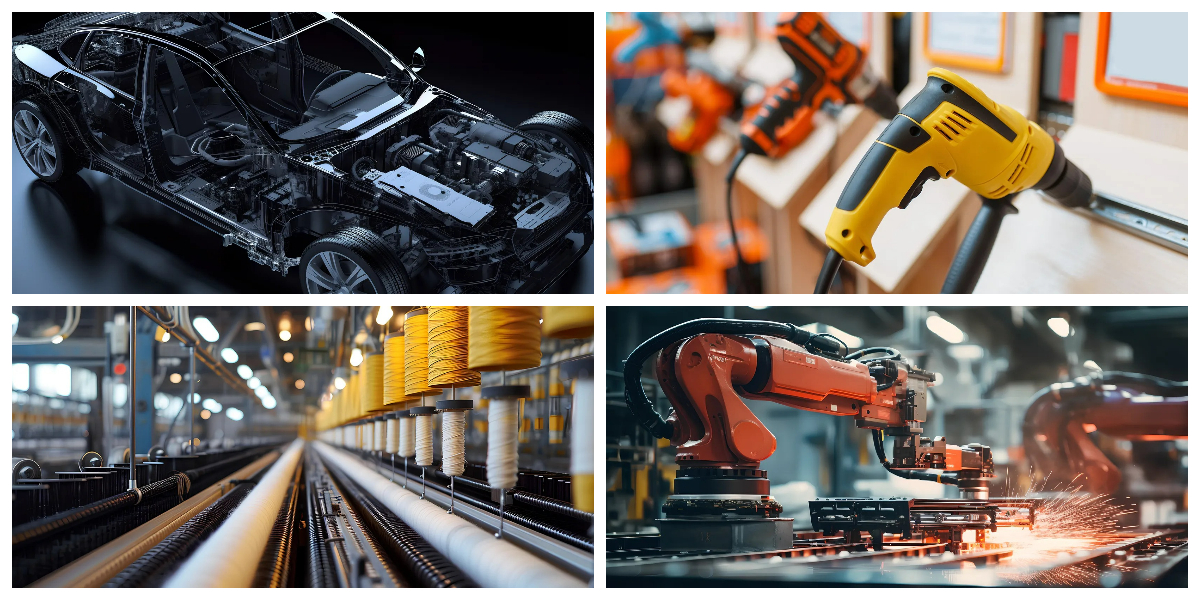
▸Automotive Systems
In automotive systems, a needle roller bearing is commonly used in transmissions, engines, gearboxes, and steering systems. These components must handle repeated load changes, vibration, and long operating hours. A needle roller bearing provides high load capacity in a compact space, which helps reduce vehicle weight and improve fuel efficiency. Its stable performance also helps reduce noise and wear, making it suitable for modern vehicles that require reliability and long service life under demanding driving conditions.
▸Industrial Machinery
Industrial machinery often operates under heavy loads and continuous working cycles. In equipment such as industrial gearboxes, conveyors, textile machines, and packaging systems, a needle roller bearing supports rotating shafts while maintaining precise alignment. Because space is often limited inside industrial assemblies, the slim design of a needle roller bearing allows engineers to build compact yet powerful machines. Its durability helps reduce downtime, maintenance frequency, and overall operating costs in factory environments.
▸Power Tools and Mechanical Equipment
Power tools and mechanical equipment require components that are lightweight, compact, and efficient. A needle roller bearing is widely used in electric drills, cutting machines, compressors, and small motors. These tools often operate at higher speeds and require smooth rotation. The needle roller bearing helps reduce friction and energy loss while supporting sufficient load. This improves tool performance, extends service life, and ensures stable operation even during frequent start-stop cycles.
Tip: Consult the Experts
Although a needle roller bearing looks simple, selecting the right one requires careful consideration of load, speed, environment, and service life. Small differences in design or material can lead to big differences in performance.
For complex or critical applications, consulting experienced bearing specialists is the best way to ensure the correct needle roller bearing selection. Professional technical support can help you reduce risk, avoid costly failures, and achieve the best long-term performance for your equipment.