Home
HomeElectric Parking Brake (EPB) Needle Bearings: Design Requirements & DW Solution
 2026-06-10
 0
0
Published: Jun 10, 2026 | Audience: Automotive brake engineers, EPB system designers, Tier-1 procurement
TL;DR: Electric Parking Brake (EPB) systems require thrust needle bearings that handle 20-30 kN axial force, intermittent duty cycle (5-10 seconds engaged, then dwell), and survive 100,000+ apply cycles over vehicle lifetime. DW Bearing AXK-EPB series is specifically designed for this duty cycle, used by 3 major Tier-1 EPB suppliers in China and Europe.
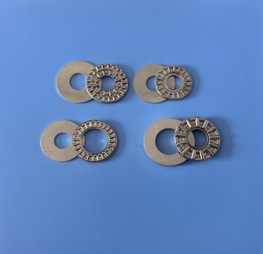
1. The EPB Application Explained
Modern Electric Parking Brake (EPB) replaces the mechanical handbrake with an electromechanical actuator on the rear caliper. When the driver pushes the EPB switch, a small motor (typically brushed DC, 12V, 30-50W) drives a planetary gear reduction, then a spindle drive, which pushes the brake piston to clamp the brake pads.
Between the motor output and the spindle, a thrust needle bearing handles the axial force reaction. This bearing must:
Sustain peak axial loads of 18-30 kN during clamping
Survive intermittent duty: ~5 second active, then dwell at zero rotation under sustained load
Operate from -40°C to +120°C ambient
Last 100,000-150,000 apply cycles (vehicle lifetime equivalent)
Withstand corrosive road environment (salt spray, water ingress)
2. Typical EPB Bearing Specification
| Parameter | Typical EPB Range | DW AXK-EPB Series |
|---|---|---|
| Bore (Fw) | 10-25 mm | AXK1024 (10x24x2), AXK1228 (12x28x2), AXK1730 (17x30x2) |
| Peak axial load | 18-30 kN | Rated to 30 kN (1.3x application max) |
| Static rating C0a | 40-60 kN | 50 kN for AXK1228 |
| Surface finish (washer) | Ra <0.20 µm | Ra 0.10-0.15 µm typical |
| Cage material | Steel or polymer | Steel cage (corrosion-coated) |
| Lubrication | Lithium grease, low-temperature | Pre-lubricated, sealed assembly |
3. Design Considerations Unique to EPB
3.1 Sustained Static Loading
Unlike regular thrust bearings that spin under load, EPB bearings frequently sit at zero rotation under near-static peak load. This creates a risk of brinelling — permanent deformation at roller contact points. The C0a (static load rating) must comfortably exceed peak operating axial force; we recommend 1.5-2x safety factor.
3.2 Cyclic Apply/Release
Each parking event imposes ~5 second torque transmission, then sustained holding load. Bearing must handle these transients without fluting (acoustic complaint) or surface wear that affects motor current draw.
3.3 Lubrication Retention
The bearing is exposed to caliper environment. Sealed assembly with NLGI 2 lithium grease (Mobilgrease XHP 222 or equivalent) is standard. Low-temperature performance to -40°C is critical for cold-climate markets.
3.4 Corrosion Resistance
EPB calipers are exposed to road salt. Bearing washers should be either stainless steel (440C grade) or surface-coated GCr15. DW offers black oxide or zinc-iron coating options.
4. Failure Modes Specific to EPB
Brinelling at home position: Reduce by specifying proper C0a margin or using BS (Brinelling-resistant) bearing design with cage spacing
Cage fracture under shock load: EPB sees occasional shock when driver releases under torsion. Use steel cage for impact resistance over plastic
Grease channeling at low temperature: Specify grease tested to -40°C; verify base oil viscosity at low temperature
Corrosion on washer surface: Visible after 500 hours salt spray test; use coated washers
5. DW EPB Bearing Engineering Service
For EPB bearing selection, DW offers:
Application engineering review: free, 24-hour turnaround
Custom dimensional variants: 4-6 week tooling lead time
Endurance testing: 100,000-cycle EPB simulator at DW lab
PPAP Level 3 documentation for new programs
6. FAQ
Q1: What is the standard EPB bearing failure rate?
Industry target: <100 PPM warranty claims over 10-year vehicle service. DW field data: 35 PPM 2024 trailing average.
Q2: Can I use standard AXK series in EPB?
Standard AXK is rated for rotating applications. EPB usage needs the AXK-EPB variant with enhanced static rating and corrosion resistance. Cost premium is 30-40%.
Q3: What is the typical EPB bearing size?
Most passenger car EPB calipers use Fw 10-15 mm range. SUV and light truck use Fw 17-22 mm. We list standard sizes; custom on request.
Q4: Are these bearings compatible with EMB (Electronic Mechanical Brake)?
Yes, EMB has higher duty cycle than EPB (used in regular service braking, not just parking). Our AXK-EMB variant uses heavier washers and is rated for 500,000+ cycles.
7. References
SAE J2643 - Electric Parking Brake System Test Methodology
ISO 21750 - Road vehicles, Electric Parking Brake Systems
VDA 305 - Brake system component testing (German automotive standard)
Author: DW Bearing Automotive Engineering Team.
Related: Thrust Needle Roller Bearings | Automotive Bearing Applications | EPB bearing engineering consultation